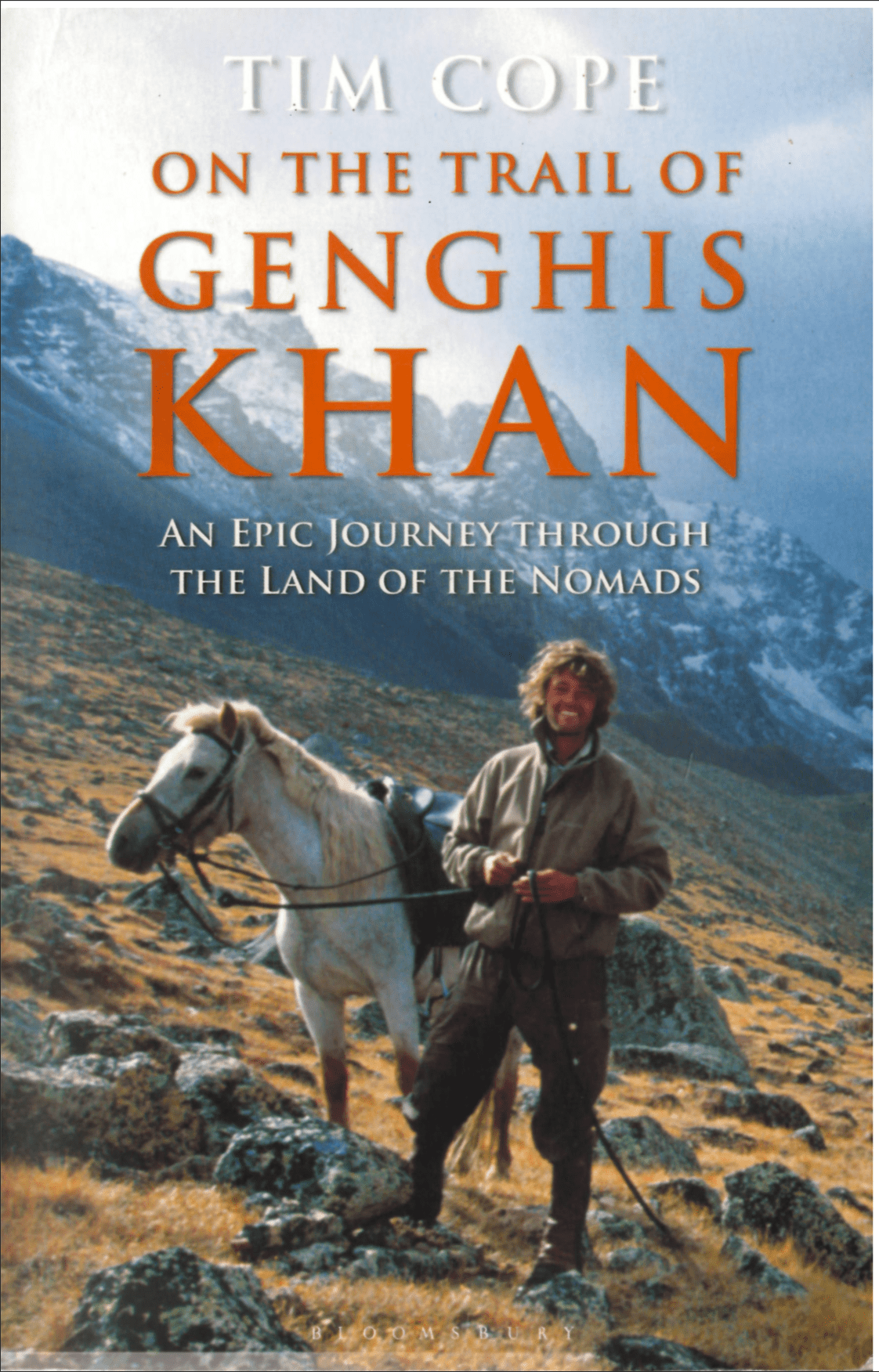
Hey guys, welcome to my blog, my name is Yonas and for my first blog, I wanted to talk about a part of a book I read recently. First let me introduce the excerpt to you, and what it is about.
The book is called “On The Trail of Genghis Khan: An Epic Journey through the Land of the Nomads”. It is about a man called Tim Cope, traveling on his horse, from Mongolia to Hungary, with his only companions being animals. Alongside him and his horses, his dog joined them on their journey. In this excerpt, he is currently in Kazakstan, learning about the way men would get married, and how “older” men would find wives. It used to be a tradition to kidnap the woman that you wanted to marry, and to bring her to your house where you would propose. The family of the women would only be alerted once the woman was at a safe distance away from the house, so that they wouldn’t find the woman anymore. The woman would then become a kind of maid, doing all of the house work, like cleaning and taking care of children, and the men would then go to work to get the money necessary for the family.
I think this is an example of showing that this is a slightly older tradition. First of all, due to the way in which the jobs are split, and what both people have to do. Men are the ones who bring the money, and go to work, whereas women are the ones who are supposed to stay at home, and take care of the house. The women are also treated like objects, as men are just kidnapping them, so that they can then marry them. These woman, don’t even have to be familiar with the man. They could just be a random woman, which was found, and was thought to look beautiful. These women were then brought to the man’s house, where the man would eventually propose, to make the woman stay at his house. In my opinion, this tradition is harmful, due to the fact that this tradition is pretty much promoting sexism. In this text, the women that are being kidnapped don’t even actually have the right to reject the proposal, because they could get hurt, and when the woman get kidnapped, they can’t really do anything. Fighting the kidnapping could get them into trouble, or again hurt them, if they would be kidnapped to marry someone, and they reject, with their parents already having been alarmed that their child has been kidnapped, and the parents won’t be very likely to find their child again, due to them only being alarmed when the woman is already far away from where she was kidnapped from.
We have been learning about traditions in our english class, and I have seen some similarities between this book, and what I have learnt about harmful traditions. I believe that clearly all harmful traditions will always harm someone. But these kinds of traditions are dangerous. For example, due to them promoting sexism, and making women seem like objects, that can just be picked up on be brought to wherever someone wants to “use” a woman. On top of that, these women are only used for things such as marriage, or even just for making them their own personal maids. I can also relate this to our class, because our current whole topic is about traditions, and we learnt about different cultures and their traditions, so if it is a tradition, which has been celebrated for a long time, you could not just stop celebrating it, because of people telling you its bad, if it has been part of you culture for a long time. People are not very easily influenced or persuaded, so if there are just a few people telling them to stop celebrating traditions which might be a very important part of their culture, or of the history of their culture, they can’t just stop celebrating it, because of a few people telling them to stop celebrating it.
Overall, I think that kidnapping women, clearly is a tradition which promotes sexism, but we can’t just tell people to stop celebrating these traditions, because it may not seem normal to us. It may be part of their culture, so we can’t just tell them to stop celebrating traditions, that might make up a huge part of history in their culture. I hope you liked my blog entry, and if you have any questions, leave them in the comments. Come back next week, to learn more about this book.
 Yonas's Blog